
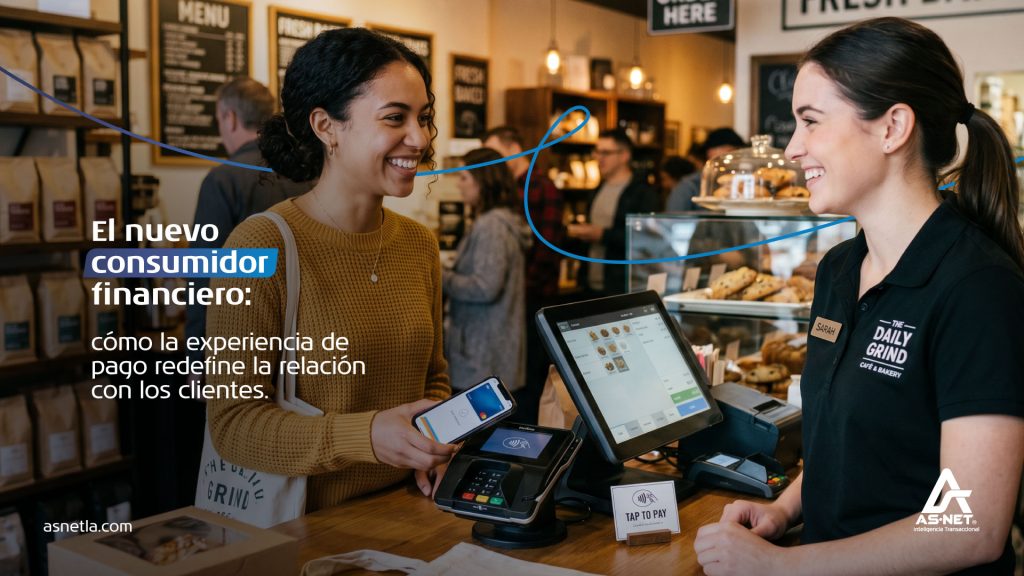
The financial consumer no longer makes decisions as they used to. Today he arrives informed, compares in seconds and chooses based on the experience he receives. It not only evaluates products, but also how easily, quickly, and flexibly you can use them. And in that process, smart payments became one of the most determining factors.
Digitalization reduced barriers in the financial sector in a way that was difficult to imagine ten years ago. Today, a user can compare multiple options before making a decision, try new services with a couple of clicks, and switch providers without the complex processes that previously held them back.
This new behavior drove the evolution towards smart payments, where the payment process is no longer only functional, but strategic. The customer evaluates costs, benefits, user experience and speed of service, and chooses based on which option is most convenient for them at that moment. According to recent industry studies, 73% of users say that a bad payment experience leads them to never use that service again.
To talk about smart payments is to talk about experience. It’s no longer just about completing an operation, but doing it in a way that the user doesn’t even notice the process because everything worked exactly as they expected.
A smart payment is:
When a checkout process creates friction, the customer immediately perceives it as a bad experience. On the contrary, when it is simple and fluid, it becomes a powerful differentiating factor.
In economies where growth is moderate and the pressure on the consumer’s pocket increases, flexibility becomes a key differentiator. For this reason, smart payments today integrate financing options that adapt to the reality of each user.
Models such as deferred payment or buy-now-pay-later schemes are rapidly gaining traction because they allow:
For financial organizations, these models are not just a trend. They are a concrete opportunity to connect with the real needs of the customer and build relationships of greater value.
Smart payments are critical, but they’re not everything. The real differential is in understanding the customer holistically: how they decide, what they expect and what they value in each interaction with their financial institution.
This involves designing experiences that go beyond the product and are integrated into the user’s life. Organizations that achieve this will stop competing on price or functionality alone, and start competing for something much more powerful: trust.
Sometimes the market evolves faster than organizations. Here are clear signs that it may be time to review your strategy:
If you identify any of these signals, the message is clear: the market has already moved and it is time to accompany that movement.
Smart payments are redefining the way customers interact with financial institutions. The ability to compare, choose, and access flexible solutions was a complete game-changer.
Understanding these changes is not optional. It’s critical to compete in an environment where every interaction counts and where the checkout experience can be the difference between winning or losing a customer.
At AS·NET we work to ensure that financial institutions have the necessary technological infrastructure to meet this new consumer. Because building financial services for everyone also means building them thinking about how each person experiences them.
Follow us on LinkedIn and Instagram and discover more content on innovation and financial technology.