
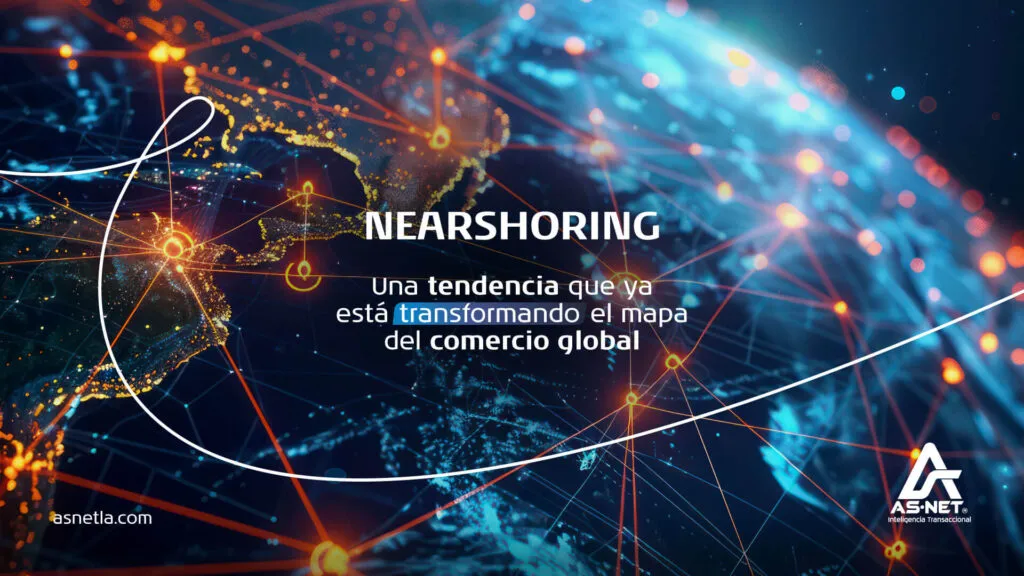
In recent years, the rules of the game in international trade have changed. Geopolitical tensions, the pandemic, and logistical bottlenecks have made it clear that relying on distant suppliers isn’t always the best idea. Companies, driven by this new reality, began to look closer. And that’s where nearshoring comes in.
This strategy of moving operations to countries closer to the end market is becoming a key strategy for reducing risks, gaining agility, and achieving greater control over processes. But it’s also a unique opportunity for Latin America.
Beyond being a current trend, nearshoring addresses urgent questions: How sustainable is it to continue relying on Asia for almost everything? Where can we produce without losing efficiency or competitiveness?
What once seemed unthinkable—moving factories, suppliers, and operations centers to other continents—is now a strategic decision. Geographic proximity, lower logistics costs, cultural affinity, and the availability of talent are making our region stand out.
Countries like Mexico, Colombia, Costa Rica, and the Dominican Republic are already seeing the benefits of this trend. With varying degrees of success, they all share an attractive combination: strategic location, trade agreements, free trade zones, developing infrastructure, and a workforce eager to grow.
Colombia, for example, is emerging as one of the most promising destinations. Its location between two oceans, advances in digitalization, and the tax benefits of its free trade zones make it a real alternative to more distant and complex markets.
A fundamental role. Without automation, traceability, or predictive analytics, nearshoring falls short. That’s why technologies like artificial intelligence, blockchain, and big data are the silent drivers of this transformation. They enable a supply chain to not only be close, but also operate with precision.
And this is where technology companies like AS•NET have a lot to contribute.
Of course, not everything is rosy. There are still important gaps to close:
But identifying these challenges isn’t a barrier. It’s the first step toward better preparing ourselves.
The shift of operations to Latin America will open up a range of needs, such as cross-border payments, foreign currency financing, currency hedging, process automation, and real-time logistics monitoring. In short, those who anticipate can become strategic allies of this new economic model.
That’s why, at AS•NET, we are convinced that nearshoring is not just a business strategy. It’s a way of thinking differently, connecting regional capabilities, and building solutions that meet global challenges.
Global trade is being reshaped. And Latin America has a historic opportunity to take on a more prominent role. Seizing this opportunity depends on smart decisions, cross-sector collaboration, and a constant drive for innovation.
At AS•NET, we will continue to support this process, supporting organizations that are ready to move, adapt, and grow.
Visit us on Instagram